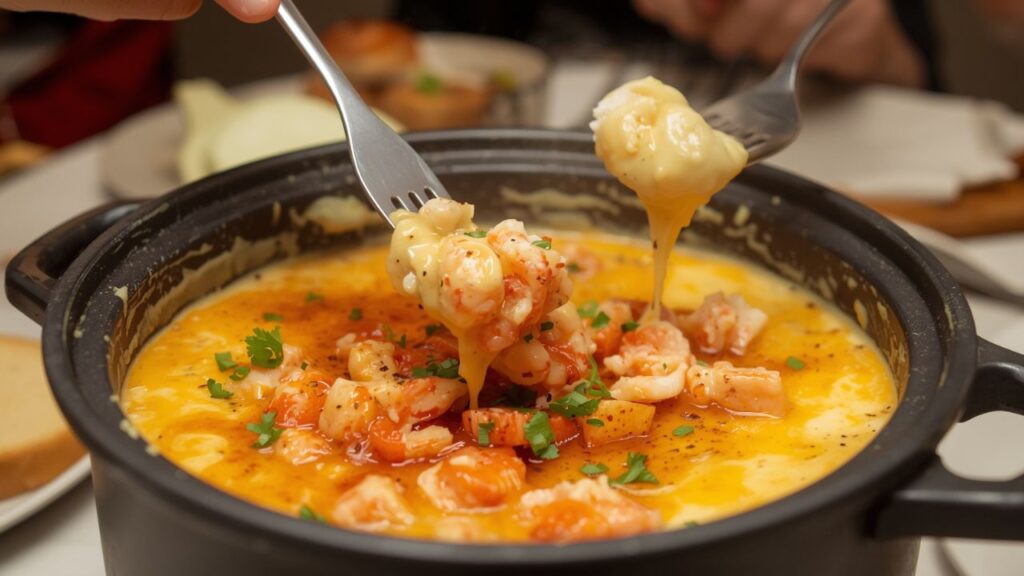
Lobster dip is a fancy group dish where cooked lobster bits mix in a warm, soft, dunkable cheese or sauce. It stays melty in a pot (a caquelon) on low heat at the table. People use forks to dunk bread, veggies, or potatoes in the pot. It’s like Swiss cheese dip but with sweet lobster bits added in. It turns eating into a fun thing, more about hanging out than eating fast. “Dip” comes from the French word “to melt,” which tells you how it’s cooked.
The Core Components Breaking Down the Dish
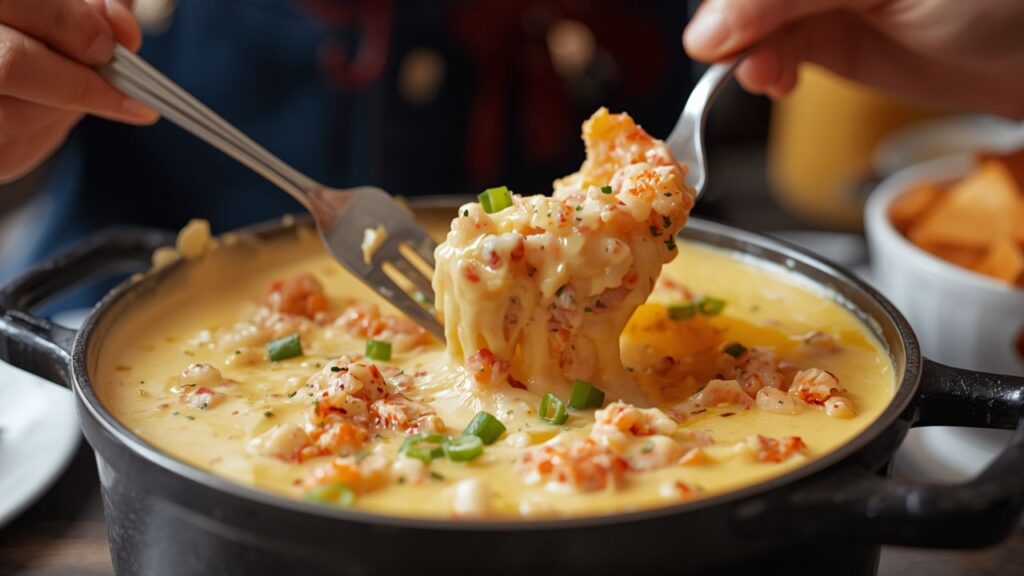
To nail lobster fondue just right, know the three funky parts that bring it to life. Lobster comes first, think tail and claws, needs to be freshly cooked, then cut up into yummy tiny bits. Next up is the fondue, a groovy cheese blend like Gruyère and Emmental, thinned out by white wine, plus spice dust. Or, switch it up with a thick white goo or cheese sauce as a base. Lastly, serving is key, with special tools to keep things cozy and warm, made for sharing. All parts groove well: the smooth, rich, tangy fondue, the sweet, firm, sea tasting lobster, and serving creates chats and bonds, not just seafood on a plate.
A Brief Historical Context and Evolution
To get lobster fondue, understanding its strange food past is key. Fondue started way back with Swiss farmers, who found cool ways centuries ago to soften hard cheese and old bread in winter. It got super famous worldwide as a fun, sharing food fad in the 1900s. Lobster fondue showed up then as a fancy twist, mixing fondue’s cozy, shareable vibe with lobster, a posh treat tied to parties and wealth in Europe and North America. This mix showed fondue turning from a thrifty dish to a planned fancy treat. New takes, like “Fondussimo,” work to tweak the taste balance and push it as a simple joy for today’s home chefs and restaurant fans too.
Primary Cooking Methods and Techniques
To nail great lobster fondue, odd steps are key. Keeping heat perfect is a huge thing, so the cheesy mix won’t split and clump, like when it fails badly. A cool trick is to rub the pot with a garlic clove for a kick. After that, warm beer or wine until it almost steams. Shredded cheese, tossed with a speck of flour or starch, goes in bit by bit, stirred around until it’s quite gooey. Last, cooked lobster bits are mixed in softly to just warm, not cook them more, or they toughen. This mix sits on a low table burner to stay melted, barely simmering as you enjoy it.
Essential Equipment Needed for Preparation
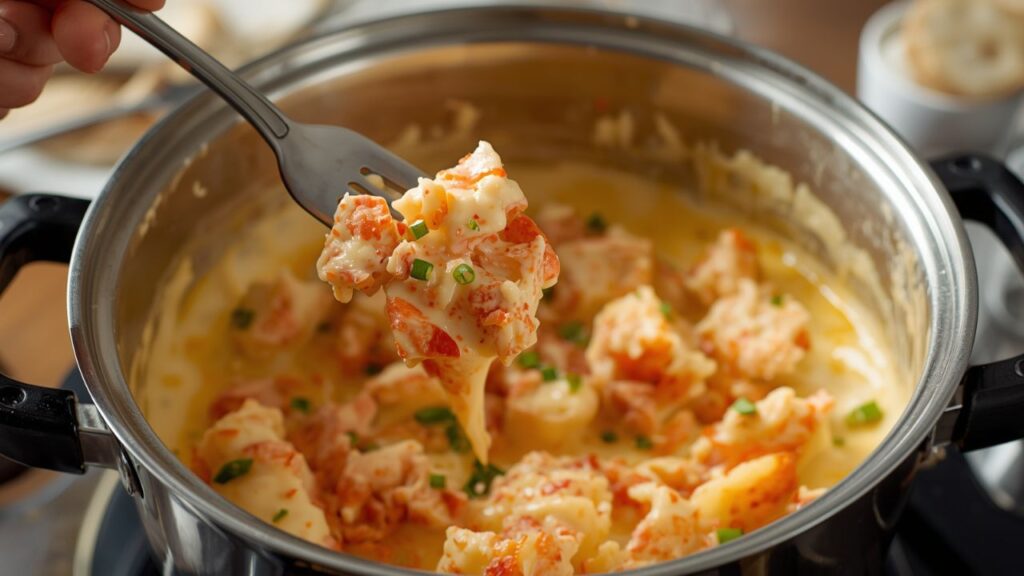
To make real lobster fondue, some odd things are needed. The main item is the fondue pot or caquelon. For cheesy fondues, use ceramic or enameled pots, because they spread heat in a soft way to keep from burning the bottom. You also need a stand with a heat thing, like a metal stand holding a burner that uses strange alcohol gel or canned fuel. Tall fondue forks with colored ends are key for dipping, plus they stop the mix of plate and pot germs. If you don’t have a set, a thick pan works for stovetop cooking, or a small electric pot warms things up well. Still, some say an open flame has more charm.
Nutritional Profile and Dietary Considerations
Lobster fondue’s worth jumps all over, just like a dazed bunny, as cooks use odd recipes for it. Lobster is pretty cool, though, since it has good stuff like protein, selenium, B12, and copper, with few calories or fat. But, the cheese, cream, and butter, which often join the fondue fun, add fat, salt, and calories. If you watch what you eat, know that normal lobster fondue has dairy, gluten, and shellfish. New kinds can dodge those limits, though, with flour and bread that is gluten-free or cheese without dairy or using wine soup for lobster, but it feels strange.
Common Variations and Regional Styles
Even though old lobster fondue uses cheese, some strange twists show up sometimes. “Fondue Bourguignonne” shifts to lobster by having hot oil ready so people can cook raw lobster bits right there, dunking them in flavors. A “Fondue Chinoise” thing could use tasty broth to softly boil the lobster. Some new “lobster cheese fondue” plans grab local cheeses, maybe sharp cheddar as a US change or Comté for French feels. Others ditch cheese for a “lobster bisque fondue,” making a thick base from lobster juice, cream, and smells. These strange shifts show how bendy the dish is, keeping its fun, fancy vibe.
Ideal Food and Beverage Pairings
Picking cool stuff can make lobster fondue super fun. When choosing dunkers, think about different feels and tastes. Must-haves are bread chunks (like baguette), cooked veggies (like broccoli), also maybe apple or pear bits. To drink, the go-to thing is white wine that’s also in the fondue, like Sauvignon Blanc, Pinot Gris, or Chardonnay. The wine helps with the creamy taste. Light beer is good too. If you don’t want alcohol, try fizzy water with lemon, cold tea, or lemonade to clean your mouth for the next dunk.
Addressing Frequently Asked Questions
Lots of newbie lobster fondue chefs wonder the same things. Should I get it ready early? Making it right before grub time is best, since warming it up could make it split. Chop stuff up early, then mix it when it’s time. What if my cheesy dip goes bonkers? Yank it off the burner and mix in lemon juice or cornstarch goo like crazy (1 tsp cornstarch plus 1 tbsp cold water).
Is frozen lobster okay to toss in? Yup, defrosted and squeezed dry cooked frozen lobster is easy and works great. What’s the silly rule about dropping your bread chunk? The game says if you dunk your dunker in the pot, you gotta smooch your pal or buy the next drinks—it’s all for laughs to pump up the meal vibes.
Lobster Fondue Comparison Table
| Feature | Classic Lobster Cheese Fondue | The “Fondussimo” Experience | Broth-Style Lobster Fondue |
| Main Idea | Traditional Swiss-style cheese fondue with lobster mixed in. | Premium, curated dining event focused on luxury and balance. | Lighter, interactive hot-pot style where you cook lobster in broth. |
| Base | Melted cheese blend (e.g., Gruyère, Emmental) with wine. | Ultra-smooth, rich cheese or cream sauce, carefully crafted. | Clear, flavorful seafood or vegetable broth. |
| Lobster’s Role | Chopped and stirred into the cheese sauce. | High-quality centerpiece—often premium chunks or whole tails. | Raw or par-cooked, dipped and poached by diners at the table. |
| Dining Style | Communal dipping from a shared pot. | Theatrical, guided experience with paired dippers and drinks. | Active participation; each person cooks their own portion. |
| Best For | Cozy dinner parties and nostalgic, indulgent gatherings. | Special celebrations, anniversaries, or gourmet date nights. | Lighter meals, health-conscious guests, or a clearer lobster flavor. |
| Key Vibe | Rustic luxury. | Gourmet event. | Interactive and fresh. |
Conclusion
So, lobster fondue stands out as a food thing that hits our need for fun, group, party eats. It mixes old potluck vibe with fancy lobster. Making it needs some skill, but home cooks can do it, and it makes eating an odd fun thing, not just a quick bite. You can tweak the dish your way, and the main idea like sharing warm, yummy stuff is cool forever. You might see it in a fancy place named “Fondussimo” or cook it up at home; lobster fondue is the best choice if you want food that’s like a party and a tasty treat to remember.
AFQ’s
1. Can I make lobster fondue ahead of time for a party?
Making lobster fondue totally ahead is not a good idea. The cheesy cream part might split or get lumpy if cooled then warmed. For yummy results, prep stuff first—cook and dice lobster, shred cheese, mix spices, slice dippers. Then, mix and heat the creamy soup, toss in the lobster right before serving it to your friends.
2. What’s the best cheese to use if I want an authentic flavor?
To get that old-time taste, mixing Swiss cheeses works just right. Gruyère is a must because it melts just right, with a nutty taste. Pair it with Emmental, which is smooth and mild, so it can make it stringy. Some folks toss in a bit of Appenzeller or Vacherin to make it better. Do not use cheese that is already shredded, since it has stuff to stop clumping, so it might not melt well.
3. My cheese sauce broke and became oily. How can I fix it?
If your cheese goo splits, like oil floating in it, too much flame is often to blame. Quickly, lift the pot off the stove right away from the burner. Blend in a bit of sour cold stuff, perhaps juice from one lemon or white wine’s cold spray. Another trick, stir one spoon of starch with wine or water, one spoon will do, then mix it well in the split goo without heat. This might blend the cheese back, making it creamy.
4. I don’t have a fondue pot. What can I use instead?
There are some cool options you got. A pot with a thick base (like the iron one covered in glass) is great for making fondue right on the stove. Then, to keep it nice and toasty when you eat, move it to a small slow cooker turned to “low,” or try an electric fondue pot gizmo. If a normal pot is all you have, give it short warm-ups on the stove using super low heat, but heads up, this may affect meal flow. The thing is, use any pot that keeps heat smooth, even, and not too intense.
5. Are there any simple shortcuts for making lobster fondue easier?
Yep, smart clever tricks will ease the steps while keeping enough goodness. For the bug, great, ready-made bug bits from the fish place or cold saved claw bits helps a lot. For the start, a sure quick way is to mix easy white sauce (fat, dust, milk) then mix up your cut cheese until soft, before you add the bug. This way is more chill than old wine ways for new cooks. Lastly, use bread from shops, hard sticks for dipping skips and ovens.