If you’ve spotted “Cowboy Roll” listed with sushi and puzzled over its nature, many share your curiosity. This detailed manual exists to solve each mystery you hold about this famous dish choice. We’ll unwrap its parts, birth, flavor feel, and food stats, giving you true, plain insight. If you are a snack fan or choosing dinner, view this as your core place for knowing the famed Cowboy Roll.
Defining the Dish What Is a Cowboy Roll?
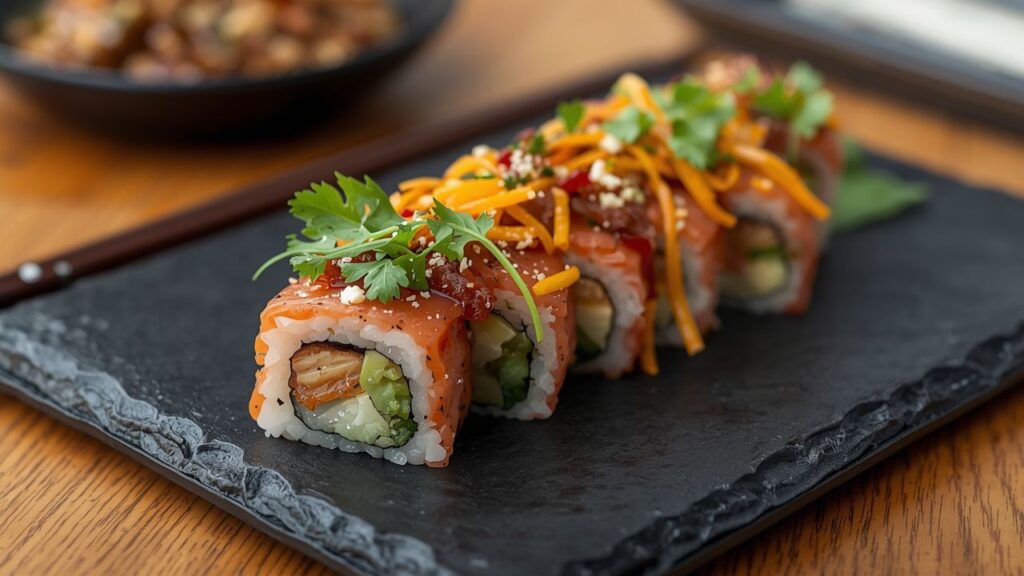
A range of Western-themed sushi exists like Cowboy Roll, an inside-out uramaki style. What marks it special is the rice placed on the outer layer. Not from old Japan, it bends sushi for American taste buds. “Cowboy” hints at strong tastes with cooked bits and creamy sauces all piled up. Usually, it comes sliced into six or eight chunks and is big enough to enjoy as a main meal.
Core Ingredients and Standard Construction
The usual Cowboy Roll sticks to a known inside stuff plan. The inner mix nearly always has a trio of parts: some kind of crab thing (often fake crab or that fish paste, but some try real crab), smooth avocado mush, and cool cucumber sticks. This heart is bumped up with fried shrimp bits or crunch bits to give some snap. The roll’s outside has rice covered in sesame dots or tan bean dust. The final bit is a cool criss-cross of two drizzles: hot mayo (mayo mixed with pepper goo) and eel sauce, a sugary, thick soy goo.
Historical Context and Culinary Origin
The Cowboy Roll hangs out in “American sushi”, showing up late in the 1900s when sushi became a hit in the U.S.A. Rolls like the California Roll (starting in Los Angeles around 1970) opened doors for strange, cooked things that made American taste buds happy. The Cowboy Roll jumps right out of this thought, maybe popping up in the 1990s or early 2000s at a sushi spot trying to cook up a neat, big roll with a funny name. It tells a tale of Japanese food skills meeting the U.S.A. ‘s love for food that tastes loud, bold, and feels new when you chew.
Detailed Flavor Profile and Texture Analysis
When you try a Cowboy Roll, you experience different sensations at the same time. The strongest taste is like a delicious fantasy with some sweetness, which comes from the eel sauce, and a light kick from the mayo. It is not overly “fishy” because it contains crab and cooked shrimp instead. It also has a great texture. The tender rice and avocado begin the experience, followed by the refreshing crispness of the cucumber, and lastly, the tempura pieces add a warm pop. The sauces bring everything together. To summarize, it is a combination that is rich but balanced to give you joy immediately.

Common Variations and Regional Differences
Though a normal recipe exists, many dining spots tweak the Cowboy Roll, which is peculiar. Usual twists you’ll find involve grilled chicken, beef, or salty fish instead of normal meat. Odd methods make it with cheese spread, giving a rich taste, while others toss in jalapeño for warmth. A “Hot Cowboy Roll” may have hot sauce stirred into the crab mix strangely. If you’re not near water, they might add crispy onions or bits instead of shrimp. Sauces differ as well; spots use pepper mayo or sugary sauce over the common duo. Check the menu’s words to see how the cooks there do it.
Step-by-Step Preparation Method
To get set for a Cowboy Roll, odd jig steps help make the sushi just right. You start by setting a seaweed paper on a roller mat for support. Then, spread vinegared rice evenly like you’re plastering gooey clay. Next, flip the paper over so the rice touches the bamboo helper now. The cool fillings of crab, avocado, cucumber, with crunchy flakes go right down its core.
The sushi chef uses the mat to squish and shape it firmly in a tube. Next, the roll gets covered with small sesame seed sprinkles all around it. A sharp slicer chops the long roll into single, pop-in-mouth pieces. Each piece is set on a dish with yummy sauce drizzles made on the top.
Nutritional Information and Dietary Considerations
Like a yummy, creamy cuddle all wrapped, the Cowboy Roll seems like an oddly neat sushi pick. One round plate (eight pieces) holds about 400-600 calories, from sweet rice and oily avocado and mayo. The crab and shrimp inside give you some strange strength. Note that this food: is not gluten-free due to fried bits, soy stuff, and wheat in the fake crab. Also, it is not for a strict plant-based eating thing. People who do not like shellfish should skip this roll. Because it’s made with cooked stuff, it works for anyone who dislikes raw fish.
Comparison to Similar Sushi Rolls
It’s useful to find the special parts of the Cowboy Roll that set it apart. Peculiar extras and crispy stuff fill Cowboy Roll, while California Roll has avocado, crab, plus cucumber. Spider Roll has soft-shell crab, however Cowboy Roll uses fried shrimp and fake crab. Dynamite Roll has cooked fish with mayo, making it smooth, however Cowboy Roll is only fried crispy stuff. Simply said, the Cowboy Roll is unique since it has sugary and salty tastes, crispness, and many sauces, making it better than California roll, but more free like other rolls.
Answering Frequently Asked Questions
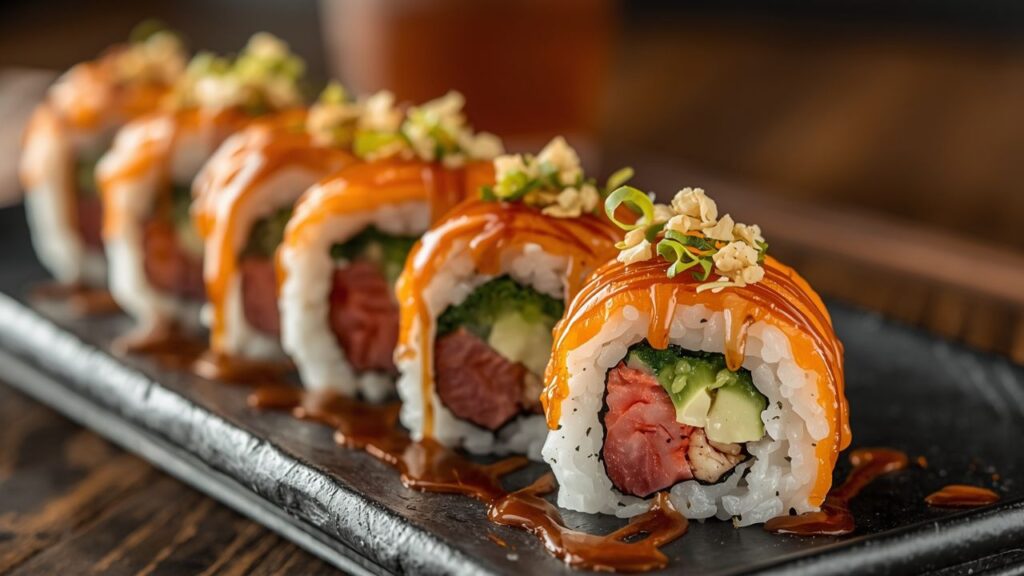
Does Cowboy Roll feel like fire? More like gentle mayo twirls give a calm buzz, not strong flames. What’s that pinkish goo? It is often mayo mixed with zesty things. What’s that shadow goo over there? Eel sauce, sweet stuff made from soy mix, plus wine and sugar. No slimy swimmers needed? Correct, Cowboy Roll keeps all swimmers out. The insides used (fake crab, fried shrimp) get cooked just right. Good starter for newbies? It is. It’s all cooked through, tastes chill, no fishy zap. Sushi first timers dig it.
Sushi Roll Comparison at a Glance
| Feature | Cowboy Roll | California Roll | Spider Roll | Spicy Tuna Roll | Dynamite Roll |
| Core Identity | The hearty, crunchy, saucy fusion roll. | The classic gateway sushi roll. | The crispy, whole-soft-shell-crab roll. | The simple, spicy raw fish classic. | The creamy, baked seafood roll. |
| Best For | Sushi newcomers & anyone craving big flavor and texture. | First-timers, kids, and a light, clean option. | Seafood lovers who adore crispy, savory crunch. | Those who enjoy the clean taste of raw tuna with a kick. | Fans of rich, warm, and creamy baked dishes. |
| Key Ingredients | Imitation crab, avocado, cucumber, shrimp tempura, spicy mayo, unagi sauce. | Imitation crab, avocado, cucumber. Sometimes tobiko (fish roe). | Whole soft-shell crab (fried), avocado, cucumber, spicy mayo. | Raw tuna (chopped), spicy mayo sauce, sometimes cucumber. | Mixed seafood (like scallops, shrimp), mushrooms, baked with mayo-based sauce. |
| Texture | The ultimate contrast! Creamy avocado, cool cucumber, warm & crispy tempura bits. | Smooth and uniform. Soft crab, creamy avocado, crisp cucumber. | Super crunchy & messy. The star is the entire crispy fried crab. | Soft and uniform. The chopped tuna has a smooth, almost paste-like texture. | Warm, soft, and creamy. The baked topping is rich and custard-like. |
| Sauces | Double sauce delight: Sweet unagi glaze + creamy spicy mayo on top. | Usually minimal. Sometimes a light mayo or just soy sauce for dipping. | Often spicy mayo. The sauce complements the fried crab. | Spice is inside! The spicy mayo is mixed right into the tuna filling. | Baked on top. The mayo-based “dynamite” sauce is baked until golden. |
| Flavor Profile | Bold, sweet, savory & slightly spicy. A full-flavored party in every bite. | Mild, clean, and subtly sweet. A refreshing and simple taste. | Savory, umami-rich, with a oily crunch from the fried crab shell. | Fresh, spicy, and fish-forward. The taste of quality tuna shines. | Rich, savory, and warm. Tastes like a comforting baked casserole. |
| Temperature | Combo! Room-temp rice with cool fillings and sometimes warm tempura. | Chilled. All components are served cold. | Can be warm. The fried crab is often served just after frying. | Chilled. The raw tuna is kept cold. | Served warm/hot. The roll is baked before serving. |
| Beginner-Friendly? | YES! No raw fish, familiar flavors, exciting textures. A fantastic intro roll. | THE MOST. The original “sushi for beginners” roll. Very approachable. | Moderate. The idea of eating a whole crab (shell and all) can be surprising. | For adventurous beginners. You need to be okay with raw fish texture. | YES. All cooked/baked ingredients with comforting, familiar flavors. |
Conclusion
The Cowboy Roll is sushi but with a funky USA vibe, like a food remix. It begins with crab, avocado, cucumber, then gets crunch from fried tempura bits. Its twist comes from hot mayo and sugary eel syrup on the very tippy top. Folks dig it ’cause the flavor’s so good, most taste buds give it a thumbs-up, plus fun textures. Even if it’s not from Japan, it is still a tasty mix that strangely fits just right. Get ready for a big, yummy bite when the Cowboy Roll arrives at your table. Its cool vibe and taste made it a winner at sushi spots all over.
FAQ’s
1. Is the Cowboy Roll actually spicy?
No problem! Usually, the “spicy” part of the Cowboy Roll comes from a bit of spicy mayo, which is more creamy and has a sharp, zesty flavor with only a little warmth instead of being really hot. It’s created to be tasty, not to be super hot. If you don’t enjoy hot foods too much, you can always ask for the mayo on the side.
2. Does the Cowboy Roll have raw fish in it?
Mostly, no way. A real Rodeo Roll has goodies that are all set, like mock crab and crispy shrimp. It’s a simple choice that won’t give you food for thought, awesome if sushi is new or you dislike slick fish. Check the menu, some folks might slip in tuna.
3. What’s the difference between a Cowboy Roll and a California Roll?
Imagine the California Roll as a quiet cousin, and the Cowboy Roll as a loud one. The California Roll is simple: it’s just crab, avocado, and cucumber inside. The Cowboy Roll starts that way but puts in cool stuff, like crunchy tempura flakes and a tasty sweet eel sauce with spicy mayo on it, making it yummier and wild.
4. Is the Cowboy Roll healthy?
It is quite a tasty treat for real. Regular raw fish or just any roll don’t hit like this. The Cowboy Roll seems grander with its crispy bits, sauces, and smooth avocado. This adds good fats and a bit of protein too, but it carries more calories and carbs. So, the play here is to enjoy it bit by bit in a nice meal, perhaps with some green soybeans or a crisp green salad too.
5. Why is it called a Cowboy Roll?
Its title shows how the US wants blend in a funny manner. The moniker sprang up from thin air, brand new. “Cowboy” hints at gusto, bold taste, a hint wild, kinda the West. It points at the roll’s bold flavors, the daring tastes, built using US sushi ideas. It aims to test limits and make something fresh.